BREATHE EASIER, MOVE BETTER: HOW TAI CHI AND A HEALTHY HOME WORK TOGETHER
Tai chi is often described as “moving meditation,” but anyone who has practiced it consistently knows it’s more than relaxation. It’s posture, breath control, balance, and body awareness—all working together to support energy, resilience, and long-term health. And sometimes, the biggest barrier to feeling those benefits isn’t motivation or technique. It’s the environment we practice and recover in.
That’s exactly why this topic came up for us recently: we were contacted by Mold Remediation Indianapolis Indiana after they noticed a pattern in homeowner concerns—fatigue, headaches, sinus irritation, persistent coughing, and “I just don’t feel right at home.” Those symptoms can have many causes, of course, but indoor dampness and mold are well-known contributors for some people, especially when moisture problems go unresolved.
This guest post bridges two worlds that actually overlap more than most people think: tai chi practice for everyday well-being, and indoor air quality as a foundation for breathing, recovery, and calm.
1) TAI CHI STARTS WITH THE BREATH—AND THE BREATH STARTS WITH THE AIR
At its core, tai chi trains us to coordinate movement with steady, comfortable breathing. Over time, that can support relaxation, stress response, and a stronger mind-body connection. The National Center for Complementary and Integrative Health (NCCIH) notes tai chi is practiced for a range of potential health benefits and is generally considered a safe mind-body exercise when learned appropriately.
But if the air you’re breathing at home is irritating your throat or sinuses, it’s harder to settle into that calm, diaphragmatic breathing tai chi encourages. People may unconsciously shorten breaths, tense the chest, or avoid deep inhalation—especially if they associate “being indoors” with congestion or discomfort.
2) WHEN YOUR HOME IS “WORKING AGAINST YOU”: DAMPNESS, MOLD, AND HEALTH
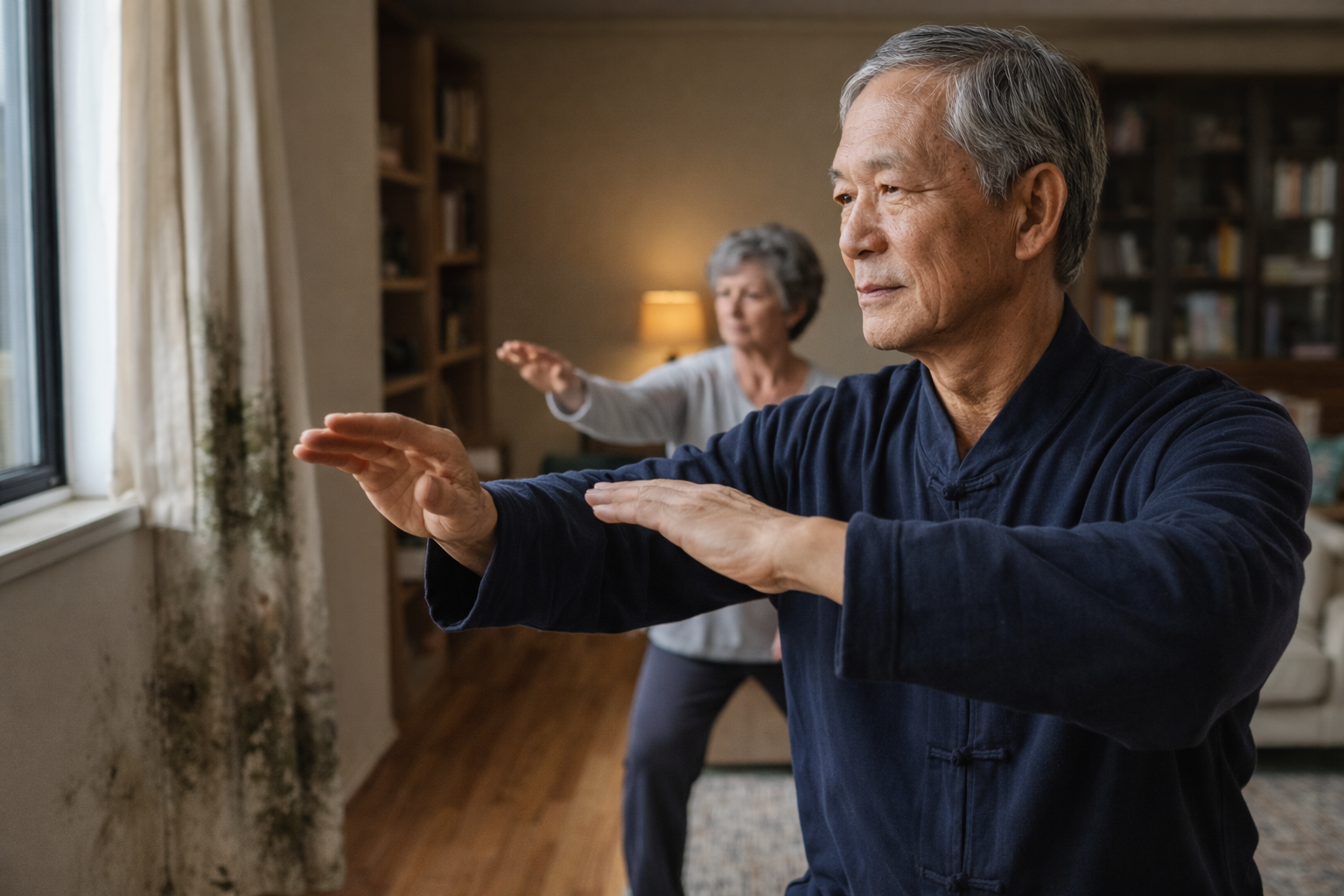
Mold is everywhere outdoors, but it becomes a problem when it grows indoors—almost always because of moisture (leaks, humidity, flooding, poor ventilation). The CDC explains that exposure to damp and moldy environments may cause health effects for some people, including nasal stuffiness, throat irritation, coughing or wheezing, and skin irritation.
The practical point isn’t to panic at every spot. It’s to understand that if you’re trying to improve your breathing, sleep, and energy through tai chi, your home environment should support that goal—not undermine it.
3) TAI CHI FOR BALANCE, STABILITY, AND “EASIER DAYS”
Many people come to tai chi for stress relief, but stick with it because daily life starts feeling easier: fewer aches, steadier movement, and improved balance. Research summarized by NCCIH indicates tai chi may improve balance and stability in older adults and has been studied for a variety of conditions, including pain and quality-of-life outcomes.
Here’s the link to indoor air quality: when you’re not sleeping well (because of coughing, congestion, or irritation), balance and coordination can suffer. When you’re constantly inflamed or uncomfortable, you may move less, practice less, and feel less confident in your body. So while tai chi strengthens the system from the inside out, removing environmental stressors helps those gains “stick.”
4) THE MIND-BODY LOOP: STRESS, RECOVERY, AND YOUR SENSE OF SAFETY AT HOME
A big reason tai chi supports well-being is that it trains the nervous system to downshift—less bracing, less rushing, more grounded attention. But a home that smells musty, feels humid, or triggers symptoms can quietly keep your body in a guarded state.
People often describe it as:
-
“I’m fine outside, but I feel off at home.”
-
“My chest feels tighter at night.”
-
“I wake up congested.”
Even when symptoms are mild, they can chip away at recovery. Tai chi becomes more powerful when your baseline environment feels stable and supportive.
5) A TAI CHI-INFORMED HOME CHECK: SIMPLE CLUES TO WATCH FOR
You don’t need to become a building scientist to make smart decisions. Use the same awareness tai chi develops—observe, notice patterns, and respond early.
Look for:
-
Persistent musty odor (especially after rain)
-
Condensation on windows or cold surfaces
-
Discoloration on drywall, ceilings, or around vents
-
Soft or warping baseboards
-
A history of leaks, roof issues, or basement dampness
-
Symptoms that improve when you’re away from home
The EPA’s guidance is straightforward: the key to controlling mold is controlling moisture—clean up mold promptly and fix the water problem.
6) PRACTICAL NEXT STEPS: SUPPORTING YOUR PRACTICE WITH A HEALTHIER SPACE
If you want tai chi to feel better in your body and your breath, pair your practice with a simple “home health” plan:
-
Lower humidity: Use bathroom/kitchen fans, dehumidifiers in basements, and ensure dryers vent outdoors.
-
Fix leaks fast: Roof, plumbing, and window leaks don’t age well—addressing them early prevents bigger problems.
-
Dry within 24–48 hours: If you’ve had a spill or water event, drying quickly helps prevent mold growth.
-
Improve airflow: Sometimes a small change—like better ventilation or moving furniture away from cold exterior walls—reduces condensation.
-
Get a professional assessment when needed: If there’s visible growth, recurring dampness, or persistent symptoms, it’s worth bringing in qualified help rather than guessing.
This is where a service like Mold Remediation Indianapolis Indiana fits naturally: tai chi can build your resilience, but if your home has a moisture problem, resolving it can remove a constant “drag” on breathing comfort and recovery.
7) A SIMPLE ROUTINE: TAI CHI PRACTICE + BREATH CHECK-IN
Try this once a day for a week:
-
Before practice, stand in wuji posture for 60 seconds. Notice: is your breathing easy or restricted?
-
Practice 5–10 minutes of slow form or a short tai chi flow.
-
After practice, repeat 60 seconds of stillness. Ask: did breathing open up? Do shoulders feel softer?
-
If you consistently feel worse in one specific room (or only at home), treat that as information. Your body may be giving you a useful signal.
Tai chi teaches us to listen without overreacting. The same approach applies to indoor air quality: notice patterns, confirm causes, and take calm, effective action.
Read More

 Tai chi is a graceful martial art that can have many benefits for your dental health. Not only is it great exercise, but it also has the potential to reduce stress and anxiety, boosting your immune system. Professionals of
